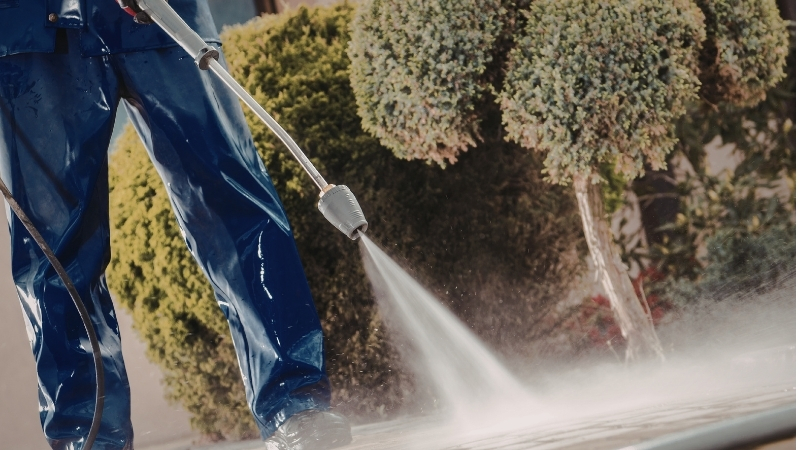
When most Sydney homeowners think about cleaning their home's exterior, they think about pressure washing. But pressure washing isn't always the right tool — and on the wrong surfaces, it can cause more damage than the grime it removes. Understanding when to pressure wash and when to use soft washing methods is essential for maintaining your property without causing expensive damage.
What Is Pressure Washing?
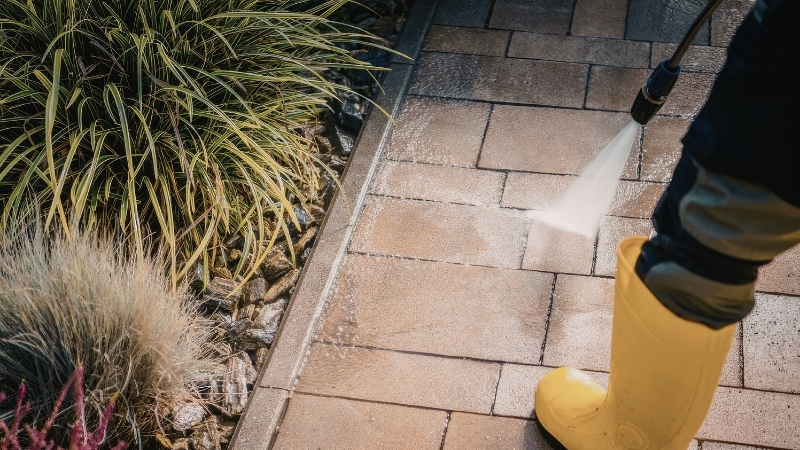
Pressure washing uses a high-pressure stream of water — typically 1,500 to 4,000 PSI — to blast dirt, grime, moss, and algae from hard surfaces. It's extremely effective on the right surfaces and can transform a grimy driveway or patio in a matter of minutes.
Pressure washing is appropriate for:
- Concrete driveways and paths
- Brick pavers and retaining walls
- Sandstone paving (at lower pressures)
- Concrete pool surrounds
- Timber decking (at low pressure, with the grain)
What Is Soft Washing?
Soft washing uses low water pressure combined with cleaning solutions to break down and kill organic matter — algae, mould, mildew, and lichen — rather than blasting it off with force. The chemical does the work; the water rinses it away gently.
Soft washing is the correct approach for:
- Render and painted exterior walls
- Roof tiles (terracotta and concrete)
- Colorbond and zincalume cladding
- Timber fencing and cladding
- Fibrous cement sheet exteriors
- Older brick or sandstone with crumbling mortar
The Damage Risk of Wrong-Pressure Washing
In Sydney's older suburbs — Paddington, Surry Hills, Newtown, Glebe — many homes have rendered brick or sandstone construction. High-pressure washing on these surfaces forces water into the structure, damages mortar, strips paint, and can cause spalling in natural stone. The short-term gain of cleaner-looking walls is not worth the medium-term repair costs.
Roof tiles present a similar problem. Pressure washing concrete or terracotta tiles removes the surface coating that protects them from UV degradation and water ingress. Once the coating is gone, tiles become porous and require sealing — an unnecessary cost that professional soft washing avoids entirely.
Sydney's Specific Exterior Cleaning Challenges
Coastal properties in Coogee, Bondi, and Randwick deal with salt air that accelerates biological growth on exterior surfaces. Combined with Sydney's humidity, algae and mould establish on render, fencing, and paving faster than in drier inland cities. Regular soft washing of exterior walls and surfaces is maintenance, not a luxury.
In the Inner West, older terrace homes often have front fences and paths in sandstone or old brick. These need careful, low-pressure cleaning with appropriate products — not a standard pressure washer on full setting.
How to Choose
A simple rule: if the surface is hard, non-porous, and structurally sound, pressure washing is fine. If it has a coating, is porous, old, or fragile, soft washing is the right approach. When in doubt, start with soft washing — it's always safer. You can increase pressure if needed; you can't undo the damage from starting too high.
HomeKeep's exterior cleaning service covers both pressure washing and soft washing, with professionals who assess each surface before starting. This means the right method is used every time, without the risk of homeowner error.


